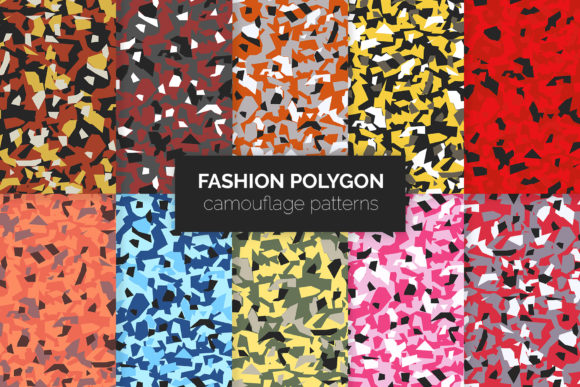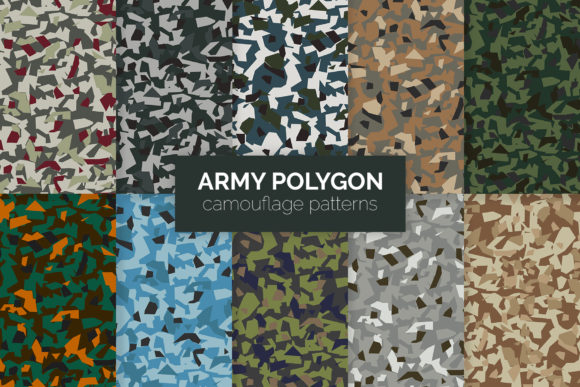
Army Polygon Camouflage: Beyond the Battlefield
When you think of camouflage, you likely imagine soldiers blending into dense forests or arid deserts. The core idea is simple: to conceal. But modern camouflage, particularly the geometric family known as Army Polygon Camouflage Patterns, is a fascinating fusion of art, science, and practical design that has found a surprising new life far from military barracks. This article explores what these patterns are, why they work, and how their unique value is being unlocked by civilians, creators, and businesses worldwide.
The Geometry of Concealment
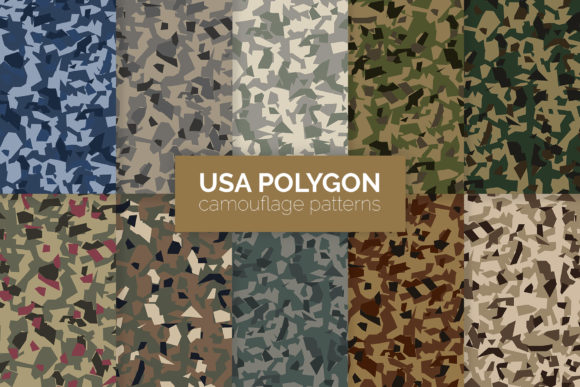
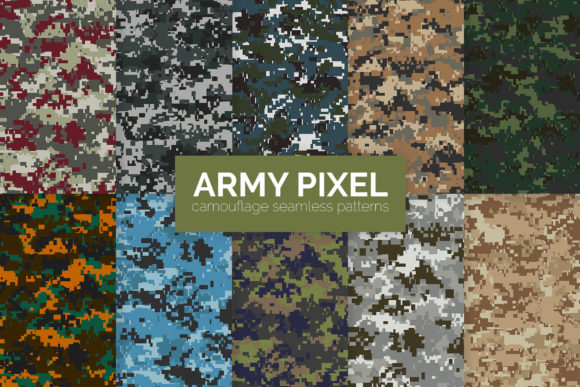
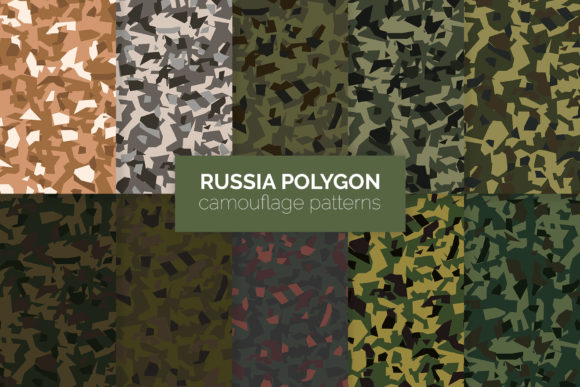
Unlike traditional camouflage that mimics organic shapes like leaves and branches, polygon patterns are built on a foundation of sharp angles, intersecting shapes, and digital-like pixelation. Think of it as a high-tech, fractured mosaic. This design approach, seen in patterns like the Russian "Digital Flora" or the US Marine Corps' MARPAT, isn't just stylistic. It's engineered to disrupt the human eye's ability to recognize a familiar silhouette.
The human brain is excellent at picking out straight lines and continuous curves—the outline of a person or a vehicle. Army Polygon Camouflage Patterns deliberately break up those lines with a chaotic arrangement of polygons in contrasting shades. At a distance, these shapes blend to create a blurring effect, making it harder to determine where the object begins and the background ends. This is a principle known as shape disruption, and it's incredibly effective in varied environments.
Key Characteristics of Polygon Patterns
- Digital Pixelation: A blocky, pixelated appearance, even when printed on fabric.
- High-Contrast Geometry: Use of sharp-edged shapes like hexagons, squares, and rhombuses.
- Multi-Scale Design: Works effectively at both close range and longer distances.
- Environment-Specific Color Palettes: While geometric, the colors are still chosen for specific terrains (woodland, desert, urban).
- Fractured Edge Effect: Creates a non-cohesive border that disguises the wearer's outline.
From Tactical Gear to Mainstream Appeal
The journey of Army Polygon Camouflage Patterns into public consciousness is a story of aesthetic adoption. What began as a purely functional solution for soldiers has been embraced for its bold, cyberpunk-esque visual appeal. It represents a blend of order and chaos, structure and randomness, which resonates in our digital age. This has led to its application in areas no soldier would ever tread.
Practical Applications in Civilian Life
For general consumers, the pattern is a statement. It appears in streetwear, sneakers, phone cases, and laptop skins. It signals a taste for tech-influenced, utilitarian fashion. For creators and designers, polygon camouflage is a rich source of inspiration. Its geometric complexity offers textures for digital art, video game environments, product design, and even architectural accents. The pattern's inherent "digital" feel makes it perfect for projects aiming for a futuristic or tactical aesthetic.
Business owners, particularly in niche markets, use these patterns for branding products related to outdoor sports, gaming, tech accessories, and security services. It instantly conveys associations with durability, innovation, and a edge. Furthermore, online users seeking unique digital assets—for backgrounds, stream overlays, or social media content—find the pattern's ready-made complexity a valuable resource.
Evaluating Its Value for Your Needs
The utility of Army Polygon Camouflage Patterns extends beyond its visual punch. Its value depends entirely on the project or purpose.
- For Aesthetic Projects: If you need a visually striking, modern pattern that implies technology and strength, it's an excellent choice. Its ready-made complexity saves design time.
- For Functional Concealment: While its military origins are for concealment, civilian use for hunting or outdoor photography in similar environments can be effective, provided you match the color palette to your terrain.
- For Branding and Marketing: It can powerfully niche a brand. But consider your audience. It speaks strongly to a demographic interested in gaming, military history, tech, or outdoor adventure.
Strengths and Considerations
A primary strength is its versatility. The same pattern file can scale from a tiny logo element to a large banner without losing its defining character. It also carries a built-in cultural narrative of high-tech adaptation and resilience.
However, there are considerations. Its association with military forces is permanent. For some projects or audiences, this might be undesirable. Also, because it is a busy pattern with high detail, it can be visually overwhelming if used over large surfaces without balance. Sometimes, using it as an accent rather than a primary cover is more effective. Finally, while digitally born, reproducing the fine details of Army Polygon Camouflage Patterns on physical materials like fabric requires high-resolution printing to maintain the crisp, pixelated effect.
Real-World Scenarios and Guidance
Imagine a small business owner launching a line of premium protective cases for outdoor electronics. Using a polygon camouflage pattern on the packaging and product itself immediately communicates ruggedness, tech-savvy protection, and a unique style, helping the product stand out in a crowded market.
A digital content creator streaming a tactical simulation game could use the pattern as a backdrop or overlay, instantly reinforcing the theme of the content and creating a cohesive visual experience for viewers.
For a professional in the security or outdoor training sector, incorporating the pattern into presentation materials or uniform accents (where appropriate) can subtly reinforce expertise and a contemporary approach to traditional fields.
How to Decide if It's Suitable
Ask yourself these questions:
- Does the "high-tech tactical" aesthetic align with my project's message?
- Will my audience understand and appreciate the pattern's origins, or could it be misinterpreted?
- Do I have the means to reproduce the pattern at the required quality (high-resolution digital for print, etc.)?
- Am I using it for its visual power, its functional history, or both?
If your answers lean towards alignment, then Army Polygon Camouflage Patterns offer a powerful, pre-engineered design language waiting to be adapted. Its journey from a tool of concealment to a symbol of contemporary style is a testament to how functional design can transcend its original purpose, offering usefulness, inspiration, and a distinct edge to anyone who knows how to deploy it.