The Practical Art of British Army Camouflage Patterns
The story of British Army camouflage patterns is not merely a military history; it is a compelling narrative of practical adaptation, environmental response, and visual problem-solving. From the disruptive blotches of early patterns to the sophisticated, digitally designed schemes used today, these designs represent a fusion of scientific research and applied artistry. Their core purpose is unambiguous: to break up the human silhouette, blend with specific terrains, and confuse observation. This makes them a fascinating case study in purposeful design, offering a rich source of inspiration for anyone interested in pattern, texture, colour theory, and visual communication grounded in real-world function.
Beyond the Battlefield: A Designer's Toolkit
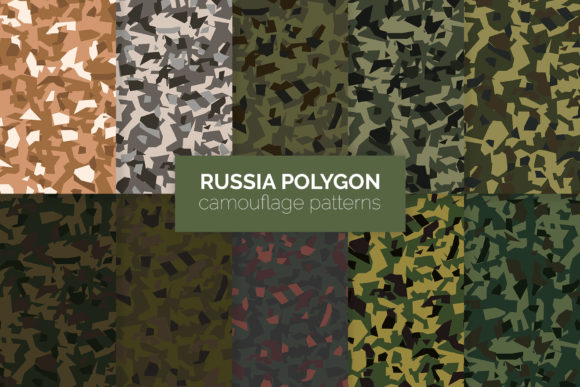
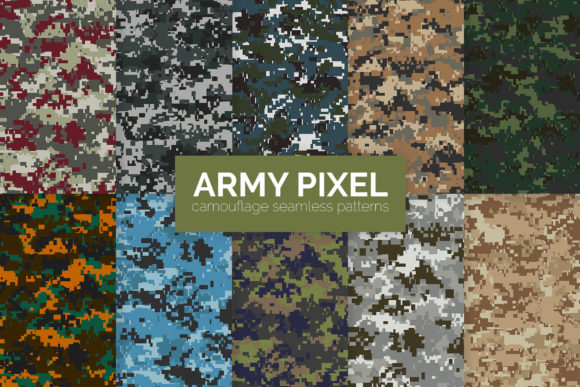
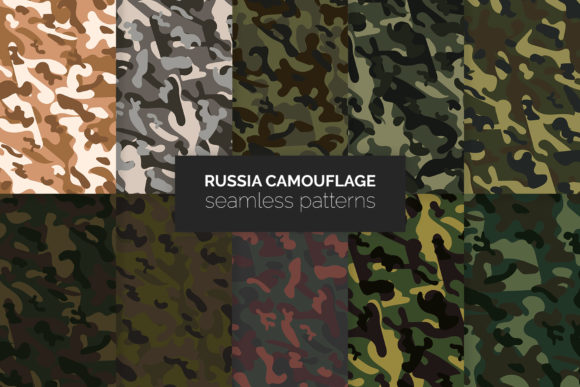
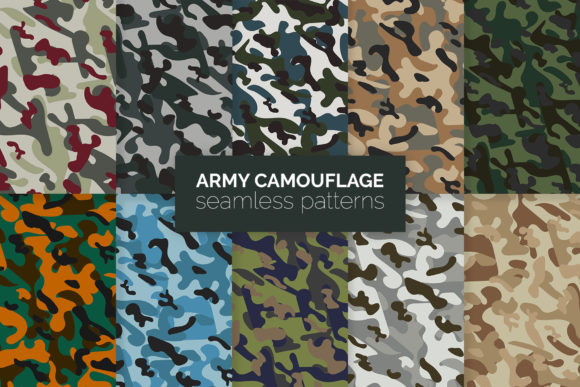
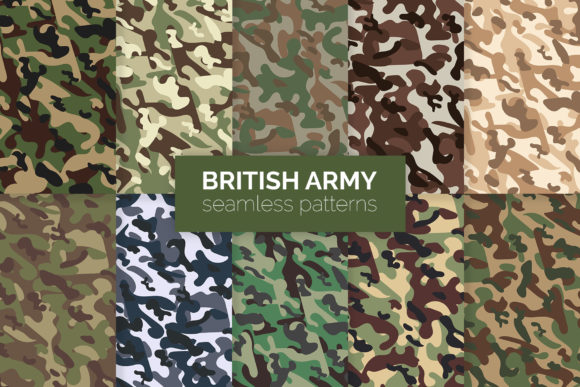
What makes British Army camouflage patterns so useful for creative professionals is their inherent logic. Each pattern, such as the iconic Disruptive Pattern Material (DPM) or the more recent Multi-Terrain Pattern (MTP), is a response to a set of constraints. The colours are not arbitrary; they are a palette derived from the dominant hues of a landscape—the browns, greens, and khakis of European woodland, or the lighter, arid tones for desert operations. The shapes are not purely abstract; they are designed to mimic natural shadows, foliage breaks, and rock formations. This functional genesis provides a robust foundation for creative reinterpretation.
For a graphic designer, these patterns can deconstruct the overused notion of "organic" shapes, providing a library of forms that feel naturally random yet are deliberately structured. A textile artist might study the colour gradients and overlaps in camouflage netting to inspire a fabric print that evokes a sense of depth and complexity. Even a marketer or content creator can draw lessons from the pattern's ultimate goal: to integrate seamlessly with a specific context. This principle translates to designing visual content that feels native to its platform or resonates authentically with a target audience's environment.
Creative Applications and Project Directions
The application of these patterns extends far into civilian and artistic domains. Their utility lies in their adaptability. One is not simply copying a military pattern; one is interpreting its core principles for a new purpose.
Visual Design and Branding
Consider a brand aiming to project ruggedness, outdoor reliability, or environmental awareness. Elements inspired by, for instance, the dense, green-dominant DPM could be used in muted tones for packaging, website backgrounds, or merchandise textures. The key is adaptation: softening the colours, perhaps isolating individual blotch shapes as iconic graphic elements, or using the pattern's irregular rhythm to create dynamic layouts that stand out from clean, geometric competitors. It injects character without literal militarism.
Product Design and Fashion
In product design, the textural quality of camouflage offers tactile inspiration. The layered, matte finish of camouflage fabric can inspire finishes for consumer goods—from electronics cases to furniture upholstery—that are visually complex yet neutral. In fashion, the history is deep, but moving beyond direct replication opens avenues. A fashion designer could deconstruct the pattern, using its colour separation—the way dark browns sit next to light greens—to inform a colour-blocking strategy in a garment. Alternatively, the micro-patterns within larger shapes could be amplified into bold, abstract prints for statement pieces.
Environmental Art and Spatial Design
For spatial designers, muralists, or landscape artists, the core principle of terrain blending is directly applicable. Concepts from British Army camouflage patterns can guide the creation of public art that integrates with a specific urban or natural setting, using colours and forms drawn from the immediate surroundings to make the artwork feel like a natural emergence rather than an imposition. This approach fosters harmony and context-sensitive creativity.
Adapting the Pattern for Different Audiences and Contexts
The successful creative use of these patterns hinges on understanding your audience and context. A direct, unaltered military camouflage pattern might appeal to a niche hobbyist audience interested in tactical gear or historical recreation. For a broader, mainstream audience, however, the connection needs to be more subtle and thematic.
For Educators and Publishers: The patterns serve as excellent real-world examples in teaching colour theory, pattern design, or the history of applied science. Projects could involve students analysing how MTP differs from older patterns, then creating their own "camouflage" for a chosen environment—a cityscape, a digital interface, or a social media profile—focusing on selecting colours and shapes that would facilitate "blending" in that specific context.
For Bloggers and Content Creators: The metaphorical value is potent. Writing about "social media camouflage" or "brand camouflage" can explore how entities adapt their visual tone to fit different platforms or audience segments. Visually, using pattern-inspired backgrounds in videos or graphics for content about adaptation, strategy, or nature can create a cohesive and thematic visual identity.
For Entrepreneurs and Small Business Owners: Practical inspiration lies in the pattern's efficiency and purpose. Just as a camouflage pattern is optimized for a specific terrain, a business's visual branding should be optimized for its market landscape. Does your branding "stand out" jarringly, or does it integrate intelligently, attracting attention through smart contrast within harmony? Analysing these patterns can reframe thinking about market positioning and visual communication.
Maintaining Clarity and Originality in Your Work
When drawing from such a defined source, it's crucial to avoid derivative outcomes and maintain clarity of purpose.
- Extract, Don't Copy: Focus on a single principle: the colour palette, the shape disruption, the layering technique. Use that as a starting point for your own iteration.
- Context is King: Always translate the military function into a new, relevant function for your project. Is your goal to "hide" an element or to make it "harmonize"? Is your "terrain" a website, a retail space, or a canvas?
- Simplify for Communication: Military patterns are often complex to serve their function. In many civilian applications, you may need to simplify the pattern—reduce the colour count, enlarge key shapes, create more negative space—to ensure it communicates effectively and doesn't become visual noise.
- Combine with Other Elements: Fuse camouflage-inspired textures with clean typography, or use a pattern-derived colour scheme on a minimalist layout. This contrast prevents the design from being overwhelmed by its source inspiration.
Ultimately, British Army camouflage patterns offer a masterclass in design with intent. They remind us that effective visual creation often stems from solving a problem—here, the problem of visibility. By studying their evolution, from the brush-applied patterns of World War II to the computer-aided designs of today, creatives gain not a template to copy, but a mindset to emulate: one where research, environment, and purpose drive the aesthetic. Whether your final output is a digital illustration, a physical product, a brand identity, or an educational lesson, letting these principles guide you ensures your work is not just visually interesting, but deeply grounded and purposefully applied.