Understanding Russia Camouflage Seamless Patterns for Practical Design Work
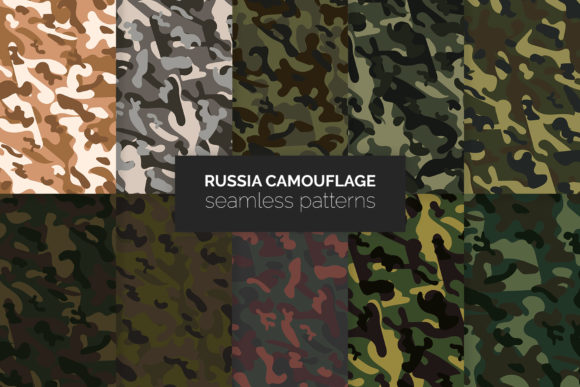
When you first encounter Russia camouflage seamless patterns, you are looking at a specialized category of digital surface design that combines military-inspired visual language with the technical precision of repeatable tiling. These patterns draw from authentic Russian military camouflage styles — including the widely recognized EMR digital flora, the older VSR pattern, and variants like Partizan or Berezka — and translate them into seamless digital files that can be tiled infinitely without visible edges. For designers, product developers, and content creators, these assets offer a way to incorporate rugged, tactical, or utilitarian textures into a project without starting from scratch. The key term here is seamless: a properly constructed pattern repeats along both axes without interruption, which matters when you are applying it to large-format prints, fabric panels, or digital backgrounds that stretch beyond a single tile.
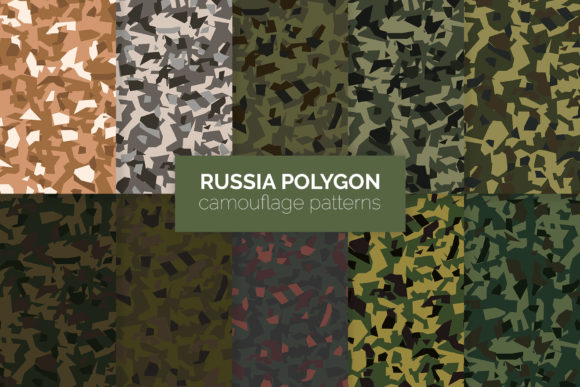
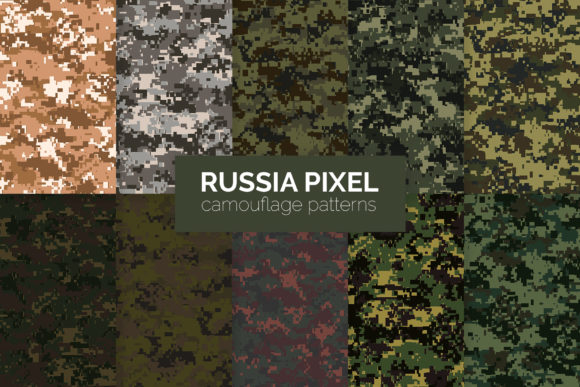
What separates these from generic camouflage is the specific cultural and visual lineage. Russia camouflage patterns often feature distinct color palettes — muted greens, browns, tans, and sometimes black or dark gray — arranged in organic pixelated clusters or wavy organic shapes depending on the era and issuing body. The digital flora pattern, for instance, uses a pixelated macro-structure that was designed to disrupt recognition at multiple distances. A seamless digital version preserves that structure while making it functionally repeatable. This matters for anyone working on merchandise, apparel mockups, vehicle wrap designs, or even thematic editorial layouts where a consistent background texture is required. The pattern's structure, when well-executed, carries the visual authority of the original military design while serving a purely aesthetic or branding purpose in civilian contexts.
Where These Patterns Fit Within a Broader Creative Workflow
The value of Russia camouflage seamless patterns becomes clearer when you map them to specific stages of a creative or commercial project. They are rarely the starting point; rather, they function as a texture layer, a background element, or a surface finish that arrives after the core concept and layout have been established. In a typical apparel design workflow, for example, the silhouette and cut of a garment are decided first. The pattern is then applied to the fabric swatch digitally to preview how the camouflage interacts with seams, folds, and contours. If the pattern is not truly seamless, the misalignment becomes obvious at the edges of each repeat tile, breaking the illusion and creating visible grid lines that cheapen the final output.
In branding and packaging, Russia camouflage seamless patterns can serve a different function. A small-batch outdoor gear company might use the pattern as a secondary visual element — perhaps as a subtle background on hang tags, as a pattern fill on packaging tissue paper, or as a textural overlay on website hero sections. Here, the pattern supports the brand's identity without competing with the primary message. The seamless nature of the file allows it to scale from a small sticker design to a large trade show banner without resolution loss or visible repetition artifacts. When the pattern is well-constructed at the pixel level, it can also be color-shifted or overlaid with brand-specific hues using blending modes in software like Photoshop, Affinity Designer, or Procreate. This adaptability extends the asset's usefulness well beyond its original colorway.
For content creators and social media managers, the application is even more immediate. A YouTube thumbnail for a military history channel, a Twitch overlay for a tactical gaming stream, or an Instagram carousel background for an outdoor survival brand can all benefit from a distinct, high-quality camouflage texture. The key practical consideration is subtlety: in most cases, the pattern should not dominate the foreground content. Blending it at reduced opacity or isolating it to specific design elements — a border, a badge shape, a text mask — keeps the visual hierarchy intact while adding depth and context. When the pattern is seamless, it can stretch across any frame size without requiring manual edge-matching, which saves time and reduces the chance of a costly design mistake.
Preparing Your Environment and Source Files
Before integrating Russia camouflage seamless patterns into any project, it helps to spend time on asset organization. These patterns typically arrive as high-resolution raster files — JPEG, PNG, or TIFF formats — with pixel dimensions that define the repeat tile. A common tile size is 2000x2000 pixels or larger at 300 DPI, which ensures usability across both digital and print applications. The first practical step is to verify that the tile is genuinely seamless. Open the file in your preferred image editor, define it as a pattern, and apply it to a canvas at least four times the tile dimensions. Scroll across the entire canvas and look for visible seams, luminance shifts, or abrupt color changes at the tile boundaries. If these exist, the pattern will cause problems downstream, particularly in print where registration errors amplify visual inconsistencies.
Naming conventions and file organization matter more than they seem. A folder labeled "Russia_Camo_Patterns" with subfolders for each variant — "EMR_Digital_Flora," "VSR," "Berezka" — and files named with resolution and color profile indicators makes retrieval faster when deadlines are tight. If you work across multiple platforms — Adobe Creative Cloud on a desktop and Affinity on an iPad, for instance — saving patterns in a cloud-synced folder with consistent naming prevents the friction of hunting for assets across devices. This may sound like minor housekeeping, but anyone who has lost an hour searching for a specific pattern file while a client waits understands the real cost of disorganized assets.
Integration With Design Software and Other Tools
Once the pattern is verified and organized, the actual integration depends on the software ecosystem you use. In Adobe Photoshop, you can load the pattern via the Patterns panel and apply it as a layer style or a pattern fill layer. The advantage of a pattern fill layer is that it remains non-destructively editable — you can scale the pattern, rotate it, and change its blending mode independently of the layer content beneath. For product designers creating mockups on 3D models, the pattern can be applied as a texture map in tools like Blender, Cinema 4D, or Adobe Substance 3D. The seamless property is critical here because 3D UV mapping stretches and repeats textures across complex geometries, and any edge mismatch becomes amplified on curved or folded surfaces.
In vector-centric workflows — designing for screen printing, vinyl cutting, or embroidery digitizing — a seamless raster pattern may need to be converted or traced. This is where planning ahead matters. If the final output requires vector separations for screen printing, you will want a pattern with clear, well-defined shapes that survive the tracing process without losing too much organic detail. High-contrast Russia camouflage patterns like EMR digital flora tend to trace more cleanly than softer, more blended patterns like the amoeba shapes found in classic green Berezka. Knowing this before you commit to a specific pattern for a screen-printed apparel run can prevent time-consuming manual cleanup later.
External tools and resources also interact with these patterns. Color palette generators can extract the dominant hues from a camouflage tile, helping you build a complementary color scheme for the rest of the project. Mockup template marketplaces often allow you to swap in custom patterns for fabric, paper, or wall textures, and the seamless nature of a good Russia camouflage tile ensures the mockup looks convincing. When using online print-on-demand platforms, always test-upload the pattern at the exact dimensions and resolution required by the platform's template. Some platforms compress uploaded files or apply automated color correction, and a pattern that looks crisp on your local screen may soften unacceptably after processing. A small test order with a cheap sample product can reveal these issues before you commit to a full production run.
Quality Control and Consistency Across Projects
Maintaining visual consistency when using Russia camouflage seamless patterns across multiple deliverables requires attention to a few technical details. Color profiles are often the first point of failure. A pattern saved in the sRGB color space may look vibrant on screen but shift noticeably when printed in CMYK. If you intend to use the same pattern across both digital and print media, create two versions: one in sRGB for screens and one in a press-ready CMYK profile with appropriate ink limits. Soft-proofing in Photoshop or another editor before sending files to a printer is a basic but essential step that catches color shifts early.
Another quality factor is the pattern's scale relative to the physical object it decorates. A seamless tile that looks balanced on a phone screen may appear disproportionately small or large on a hoodie, a notebook cover, or a tote bag. As a rule of thumb, preview the pattern at actual print size before finalizing. Many designers keep a reference ruler or measurement overlay in their template files to judge the scale accurately. If the pattern's internal elements are too tight — for example, pixel clusters in an EMR pattern that become a muddy blur at small sizes — consider scaling up the tile in the pattern definition or choosing a variant with larger, more open shapes for that specific application.
Long-Term Use, Licensing, and Organizational Memory
Russia camouflage seamless patterns, like any digital asset, come with usage rights that deserve careful review. Some patterns are released under open licenses that permit commercial use without attribution, while others require a one-time license payment or a subscription. For agencies and studios that reuse patterns across multiple client projects, tracking license terms in a simple spreadsheet — noting the pattern name, source, purchase date, allowed uses, and any renewal dates — prevents accidental infringement. This is not a glamorous part of the creative process, but it becomes indispensable when a project portfolio grows and assets accumulate over months or years.
Beyond the legal layer, think about how these patterns age within your own design library. Will the specific camouflage variant still look relevant in two years, or is it tied to a trend cycle that will make it feel dated quickly? Russian digital flora, because of its functional, pixelated geometry, has a certain design longevity that softer or more stylized camouflage patterns lack. Its modular structure reads as technological and utilitarian, which aligns with current and foreseeable aesthetic preferences in outdoor gear, tactical apparel, and industrial design contexts. That said, having multiple variants in your library — a classic VSR for vintage-inspired projects, a sharp digital flora for modern tactical looks, and a subdued, low-contrast version for subtle background textures — gives you flexibility without requiring constant asset hunting.
When training new team members or onboarding freelance collaborators, having a shared, well-organized asset library that includes these patterns reduces friction. Documenting how and where the patterns have been used successfully — maybe with quick reference screenshots in a shared knowledge base — helps others understand the patterns' capabilities and limitations without a lengthy verbal explanation. Over time, this builds institutional knowledge and ensures that the patterns are applied consistently and thoughtfully across all of a team's output.
Practical Implementation Tips for Different Use Cases
For apparel and merchandise design, always test the pattern on a 3D mockup or a physical sample before placing a bulk order. Seamless patterns behave differently when wrapped around a three-dimensional form, and what looks flat and uniform on screen may reveal distracting repeats on a garment's contours. If the pattern's repeat interval is too small, the eye will pick up on the rhythm of repetition, which undermines the organic, disruptive quality that makes camouflage effective. Adjust the scale of the pattern in your design software until the repeats blend into a natural-looking, continuous surface.
For web and UI work, consider how the pattern interacts with text legibility. Camouflage, by design, creates visual noise — which is precisely what you do not want behind body copy or interface elements. One effective technique is to use the pattern in isolated UI panels, sidebar backgrounds, or hero areas where text sits on a solid-colored overlay. Another approach is to significantly reduce the pattern's opacity and place it behind a gradient or color block that separates it from the reading area. The pattern then functions as a textural accent rather than a competing visual element.
For educators and content creators producing video or presentation materials, Russia camouflage seamless patterns can add production value to slides and video backdrops when used with restraint. A title slide or a chapter divider with a subtle camouflage background signals a specific tone — practical, outdoor-oriented, military-adjacent, or survival-focused — without requiring text explanations. The seamless nature of the pattern means it can be used across slides of different aspect ratios without manual adjustments, which keeps the production workflow moving efficiently.
The thread running through all these use cases is intentionality. Russia camouflage seamless patterns are a specialized visual tool, not a generic decoration. When they align with a project's tone, audience, and functional requirements — and when they are prepared, organized, and applied with attention to technical detail — they become a reliable, repeatable asset that strengthens the final output rather than distracting from it.