Polygon Camouflage: Digital Patterns for Creative Disruption
The grid of a city map, the fractured light through a stained-glass window, the angular facets of a crystal—our world is built on geometric foundations. Polygon camouflage patterns tap into this fundamental visual language, but with a subversive twist. Unlike the organic, blurred edges of traditional camouflage meant to dissolve into a forest, polygon camouflage uses sharp, clean, often low-polygon shapes to create a distinct, digital aesthetic that intentionally stands out while playing with perception. It is a pattern designed for the modern eye, rooted in digital art, gaming, and 3D modeling, yet offering a versatile toolkit for creators across disciplines.
The Geometry of Visual Intrigue
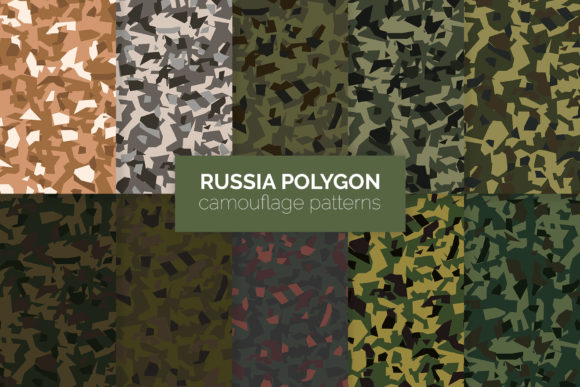
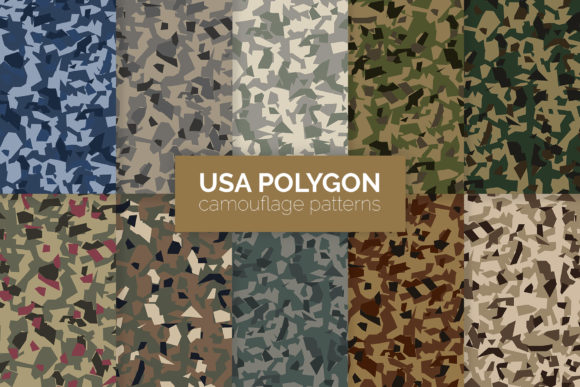
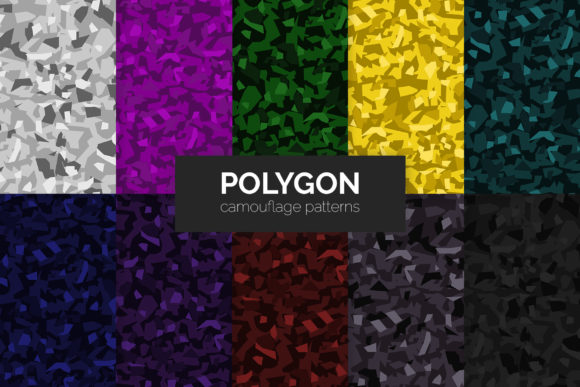
At its core, a polygon camouflage pattern is a deliberate arrangement of polygonal shapes—triangles, hexagons, quadrilaterals—in a repeating or semi-repeating sequence. Colors are often bold, contrasting, or limited to a specific palette, creating a clear separation between each shape. This creates a visual tension: the pattern suggests order and structure through its geometry, yet its purpose is to break up form and challenge the viewer's ability to discern edges and depth. This makes it inherently interesting. It’s not hiding; it’s redefining the surface it occupies.
What makes it particularly useful for creators is its generative nature. Starting with a simple polygonal tile, you can scale, rotate, and recolor to create infinite variations. It serves as a bridge between the precision of vector graphics and the textured feel of applied design. Whether you're a digital artist looking for a base texture, a marketer needing a bold background, or a product designer exploring a futuristic finish, the pattern provides a structured starting point for innovation.
Creative Applications Across Mediums
The application of polygon camouflage patterns extends far beyond its military-inspired origins. Its digital-native quality makes it adaptable for a wide range of projects.
- Brand Identity & Digital Marketing: For brands targeting tech, gaming, innovation, or outdoor sectors, polygon patterns can form the backbone of a visual identity. Use a simplified, two-color version for sleek website backgrounds, or a more complex, multi-hued variant for dynamic social media campaign assets. The pattern conveys cutting-edge, structured creativity.
- Textile & Product Design: Applied to apparel, it creates statement pieces—not for hiding, but for expressing a modern, tactical aesthetic. On products like phone cases, backpacks, or even furniture, it offers a textured, digital look that feels both manufactured and organic.
- Digital Art & Visualization: Use the patterns as displacement maps in 3D software to create terrains or complex surfaces. In 2D art, layer them with photography to fracture and reinterpret reality, creating compelling editorial or album art.
- Environmental Graphics & Public Art: Large-scale installations using polygon camouflage can transform walls or public spaces. The geometric repetition works well at scale, creating an immersive, pattern-based environment that engages viewers from different distances.
Adapting the Pattern for Audience and Context
The key to using polygon camouflage effectively is intentional adaptation. A freelance graphic designer might use it differently than an educator building a science curriculum.
For the Marketer & Entrepreneur
Your goal is communication and brand recall. Start by defining your brand's core colors and then distill the polygon pattern to use only those. Simplify the shape complexity to ensure it doesn't overwhelm your logo or text. Consider using it as an accent—on a section of a webpage, as a border, or as a dynamic element in video content. For a software company, a clean, low-poly pattern might signify precision and building blocks. For an adventure tourism brand, a greener, more irregular polygon set could evoke digital topography.
For the Designer & Hobbyist
Here, experimentation is paramount. Play with the fundamental rules. Break the repetition. Introduce gradient fills within each polygon instead of flat colors. Overlap transparent layers to create depth. Mix polygon shapes within a single pattern—hexagons with triangles—to increase visual interest. Tools like Adobe Illustrator, Procreate, or even open-source software like Inkscape are perfect for this iterative exploration. The pattern is your base grid; you decide how much to adhere to it or disrupt it.
For the Educator & Publisher
Polygon camouflage patterns can be a practical teaching tool for concepts in geometry, symmetry, and tessellation. Creating these patterns helps students understand angles, shape relationships, and repetition. Furthermore, in educational publications or online learning modules, these patterns can serve as engaging, non-distracting backgrounds for diagrams or headers, signaling a modern, structured approach to the material.
Maintaining Clarity and Originality
While the pattern is inherently striking, a few guiding principles ensure your application remains effective and not just trendy.
- Control Your Palette: Limit your color scheme. A chaotic pattern with ten clashing colors becomes noise. A pattern with two or three thoughtfully chosen colors becomes a signal.
- Define Your Scale and Density: Is your pattern a fine, detailed texture or a bold, oversized graphic element? Choose based on the medium. Fine patterns work on large surfaces; bold patterns work better as focused accents.
- Leave Space for Rest: Do not blanket every available surface. Allow the pattern to interact with negative space, solid colors, and other elements. This contrast is where it shines.
- Find Your Variation: To avoid generic results, inject a personal or contextual element. Could the polygon shapes subtly mimic the outline of your city’s skyline? Could the color palette be drawn from a specific historical art movement? This contextual hook adds originality.
Practical Project Inspiration
Consider these concrete starting points:
- Create a Modular Logo System: Design a core logo, then develop a set of polygon camouflage patterns using the logo's colors and angles. This creates a cohesive but flexible brand system for different applications.
- Develop a Custom Website Header: Code a subtle, animated polygon pattern that shifts color or opacity as the user scrolls, adding dynamic engagement without distracting from content.
- Print a Series of Art Posters: Use a single polygon pattern template but produce a series where each poster explores a different monochromatic or duotone palette, creating a collectible set.
- Design a Tactile Product: Apply the pattern not just as a graphic, but as a physical texture. For a ceramic mug, could the glaze be designed to create a polygonal, camo-like effect? This bridges digital design with physical craft.
The enduring appeal of polygon camouflage patterns lies in their dual nature. They provide the satisfying order of geometry and the thrilling disruption of camouflage. For the modern creator, they are more than a visual style; they are a methodology. A way to build with clear shapes, yet create outcomes that are complex and engaging. By understanding its structure and thoughtfully adapting its form, you can leverage this digital-geometric language to create work that is distinctly structured, intentionally eye-catching, and deeply resonant for your audience.