The Enduring Influence of German Camouflage Patterns
For designers and creators looking for patterns with a distinct edge, the world of German camouflage offers a rich and historically layered source of inspiration. Beyond its tactical purpose, these patterns—notably the iconic Flecktarn, along with predecessors like Splittertarn—are complex visual systems. They are engineered to disrupt form and blend with natural environments through intricate arrangements of shapes and colors. When adapted into seamless, tileable patterns, this military design philosophy becomes a versatile digital asset. The result is a texture that is both visually arresting and functionally robust, perfect for backgrounds, textiles, and digital environments where a seamless repeat is essential.
A Foundation of Fractured Geometry
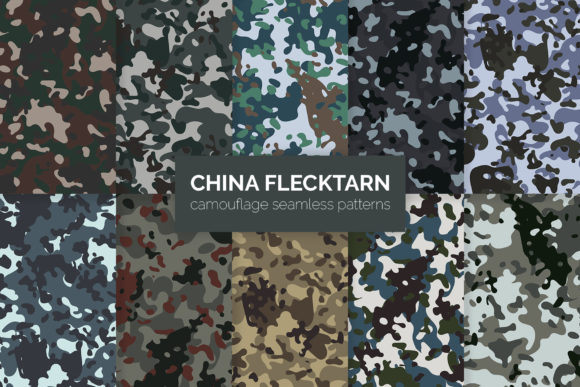
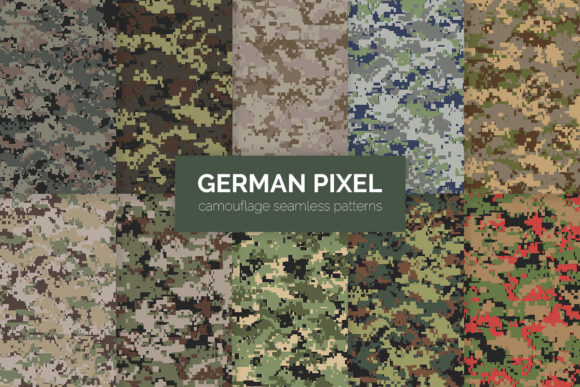
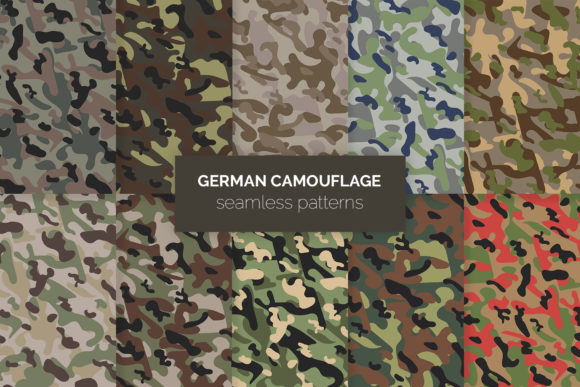
What makes German camouflage patterns particularly compelling for creative use is their underlying design principle. Unlike some simpler dot or stripe patterns, Flecktarn, for instance, employs a “fractured” or “splintered” approach. It uses small, irregularly shaped spots of multiple colors—typically dark green, light green, brown, black, and sometimes a base tan—distributed at varying densities. This creates a non-uniform, organic texture that doesn’t have a obvious repeating cell, making its seamless version especially effective. The pattern avoids rhythmic predictability, which is key to its visual interest and its original purpose of breaking up silhouettes.
For a digital creator, this means you’re working with a pattern that naturally adds depth and complexity without overwhelming a design. The color palettes, drawn from forest and woodland environments, are inherently earthy and grounded, evoking a sense of ruggedness, outdoor utility, or tactical aesthetics. This foundational geometry opens up numerous creative pathways beyond mere replication.
Creative Applications Across Disciplines
The seamless adaptation of German camouflage patterns means the design can extend infinitely in any direction. This unlocks practical applications in numerous fields. For graphic designers, it serves as a powerful background element for websites or promotional materials targeting audiences interested in adventure, military history, outdoor sports, or rugged tech. It can frame text and logos with a sense of authority and grounded realism.
In product design and merchandising, a seamless German camouflage pattern is ideal for apparel textures, from t-shirts to bag linings. It can be applied to phone cases, laptop skins, or wallpaper for a niche, statement look. The pattern’s earthy tones also make it suitable for more subtle applications, like packaging for organic or male grooming products wanting a natural, robust feel.
For game developers and digital artists, these seamless textures are invaluable for creating realistic terrain, clothing for characters, or environmental details in scenes set in wilderness or historical contexts. The non-repetitive nature of a good seamless Flecktarn pattern prevents the “tiling effect” that can break immersion in 3D environments.
Interpreting and Adapting the Pattern
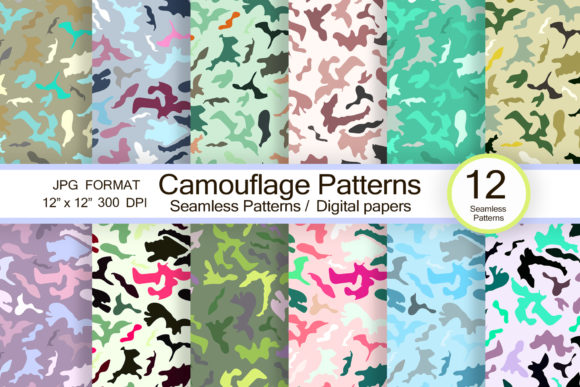
Direct use of a classic German camouflage seamless pattern is one approach, but creative reinterpretation opens even more doors. Consider altering the color palette while keeping the fractured geometry. Substituting the greens and browns with blues and greys can create a “urban camouflage” or naval aesthetic. Using muted pastels could transform it into a unique artistic pattern for fashion or interior design concepts, retaining the complexity but shifting the mood entirely.
Another approach is to deconstruct the pattern. Isolate one of the spot colors as a dominant shade and use the others as subtle accents in a broader design scheme. You can also play with scale. Enlarging the elements of a seamless German camouflage pattern dramatically can turn it into a bold, abstract geometric print for large-format applications like posters or wall murals. Conversely, minimizing it creates a finer, more textured feel suitable for digital paper or fabric.
Aligning with Audience and Context
The key to using such a distinctive pattern effectively is to align its interpretation with your specific audience and project goals. For a marketing campaign aimed at history enthusiasts, a faithful, classic representation of a German camouflage seamless pattern might be most effective. For a contemporary streetwear brand, a recolored, oversized version on a hoodie would resonate more.
Educators creating materials about 20th-century history or design theory can use the pattern as a visual case study in lectures or presentations, discussing its design principles and how they translate to digital assets. Bloggers in the outdoor niche might use a subtle version as a border or background element to reinforce their site’s thematic identity. The pattern’s inherent “utility” feel makes it suitable for brands that want to project reliability, durability, and a no-nonsense attitude.
Maintaining Clarity and Originality
When integrating such a busy pattern, balance is crucial. Ensure text placed over it has strong contrast—using solid color boxes or increased font weight—to maintain readability. In product design, consider using the pattern on specific areas rather than all-over application to prevent visual chaos.
To keep your work original, use the German camouflage seamless pattern as a starting component, not the final product. Combine it with other elements: overlay it with clean typography, integrate it into a larger illustration, or use it as a texture layer in a photo composite. This approach respects the pattern’s visual power while ensuring your final creation has a unique signature.
A Tool for Grounded Creativity
Ultimately, the German camouflage seamless pattern is more than a historical reference; it’s a sophisticated design tool. Its fractured, multi-tonal, and organic nature provides a ready-made solution for projects needing depth and texture. It encourages creators to think about geometry, color theory, and adaptation. Whether you use it authentically to evoke a specific aesthetic or reinterpret it to serve a completely new vision, it offers a robust foundation. By focusing on its seamless functionality and adaptable characteristics, you can apply it across digital and physical mediums to achieve results that are cohesive, context-aware, and creatively distinctive.