Evaluating Rose Seamless Patterns: What to Know Before You Choose
Patterns with roses, seamless pattern designs in particular, appear across a vast range of creative and commercial projects. From fabric prints and wallpaper to website backgrounds and stationery, the combination of organic floral beauty and technical repeatability makes these patterns a popular choice. But not every rose pattern is built the same way, and not every project benefits equally from a seamless repeat. This article helps you assess whether a seamless rose pattern truly fits your needs by examining what it is, the trade-offs involved, and when alternatives might serve you better.
Understanding Seamless Patterns with Roses
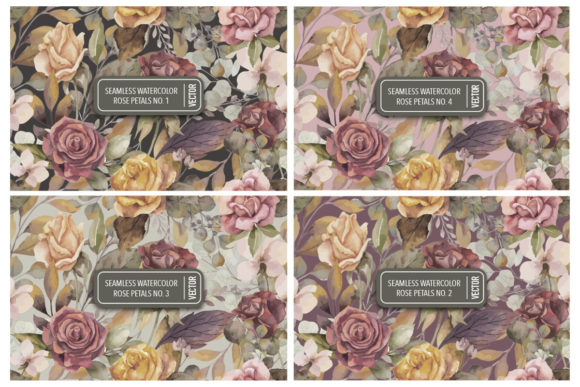
At its core, a seamless pattern with roses is a digital or hand-drawn design that repeats infinitely without visible breaks or edges. The pattern tile contains rose motifs—realistic, stylized, watercolor, or vector—arranged so that when duplicated side by side and top to bottom, the joins disappear. This is fundamentally different from a simple floral image placed on a background. The “seamless” quality ensures continuity, making the pattern suitable for large-format surfaces or digital environments where repetition would otherwise be jarring.
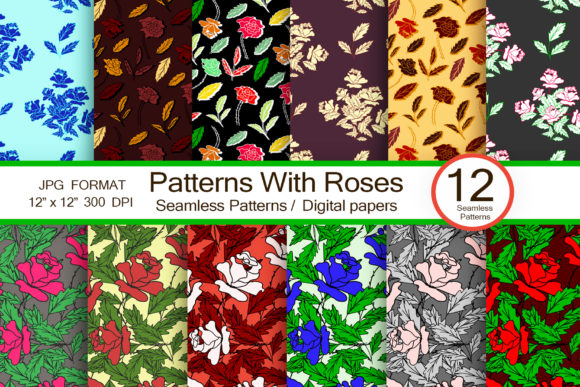
Technically, Patterns with Roses, Seamless Pattern assets can be created in various file formats: vector (AI, EPS, SVG), raster (JPEG, PNG, TIFF at high resolution), or even as physical screens for printing. Their creation involves precise alignment, often using offset techniques in software like Adobe Illustrator or Procreate. The result is a tile that designers can apply to any sized canvas, trusting that the pattern will flow naturally. Understanding this foundation helps you judge quality: a poorly constructed tile might reveal hard lines or distracting repetition artifacts, while a well-crafted one hides the tile edges entirely.
Why Creators and Businesses Consider Rose Patterns
Roses carry deep visual associations—romance, elegance, tradition, or the freshness of a garden. Many creators turn to rose seamless patterns because they need a timeless floral element that feels both familiar and versatile. For example, a fashion brand might use a delicate rose repeat on a dress fabric, while a stationery designer might apply the same pattern to note cards and wrapping paper. The repeatability allows one asset to serve multiple product lines without extra design time.
Beyond aesthetics, seamless rose patterns offer practical scalability. A single tile can cover anything from a phone case to a billboard. This scalability reduces asset production costs compared to commissioning a unique, full-sized artwork for each product size. Digital designers value the ability to instantly fill shapes in mockups, while surface pattern designers license these assets to expand their portfolios. Importantly, the decision to use a rose pattern often hinges on whether the floral theme aligns with brand identity or the desired emotional tone of the project.
Key Benefits of Seamless Rose Designs
One of the most immediate advantages of a seamless rose pattern is its coverage capability. Unlike a non-seamless tile that leaves awkward gaps or requires masking, a seamless repeat feels intentional and professional. This makes it ideal for immersive environments such as fabric, wallpaper, and large-scale prints. The pattern can also be scaled up or down depending on the desired visual impact, from a tiny ditsy rose repeat to a large, dramatic floral statement.
Another benefit is production speed. With a ready-made seamless file, you skip the time-consuming process of building a seamless repeat from scratch. Many marketplaces offer pre-made Patterns with Roses, Seamless Pattern collections that come with commercial licenses, enabling quick turnaround for commercial products. This is particularly helpful for small businesses that need to launch products rapidly without hiring a dedicated surface designer. Additionally, vector-based seamless patterns allow infinite scaling without quality loss, which is a critical advantage for printing across diverse mediums.
Consistency across multiple products also stands out. Whether you produce a line of mugs, blankets, and pillows, the same seamless rose motif maintains brand coherence. For digital use, the lightweight tile size optimizes website loading times compared to a large hero image, while still offering a rich decorative background. From a creative standpoint, the repetition of roses can create a calming, rhythmic visual rhythm that supports rather than overwhelms content.
Trade-offs and Limitations to Keep in Mind
Seamless rose patterns are not without drawbacks. The most obvious limitation is the potential for visible repetition, especially in patterns with a single, large focal rose. Even a technically seamless tile can feel monotonous when applied to a very large area if the design lacks enough randomness or secondary elements. The human eye quickly detects repeating identical clusters, which can cheapen the overall feel. To counter this, higher-quality seamless patterns incorporate multiple roses of different sizes, orientations, or color variations to hide the grid.
Another consideration is resolution and scalability in raster formats. A seamless JPEG tile that looks crisp on a screen might pixelate when enlarged for a 300 DPI print. Vector solves this, but vector-based rose patterns can look overly uniform or lack the organic texture of watercolor or gouache styles. Achieving a truly painterly seamless repeat is technically challenging; many such patterns require very large tiles to reduce obvious repetition, which leads to large file sizes that may be unwieldy.
Licensing is another factor. Not all seamless rose patterns come with commercial rights clearly spelled out. Some restrict print-on-demand usage, fabric production, or digital resale. It’s crucial to verify that the license covers your intended use, especially if you plan to sell products featuring the pattern. Furthermore, heavily trending rose styles can date quickly, making the pattern feel out of fashion sooner than expected. Objectively, a rose pattern often demands a romantic or soft tone, which might not align with environments that require a more neutral, bold, or modern look.
Where Seamless Rose Patterns Excel
If your project involves a continuous surface that will be cut, folded, or wrapped, a seamless rose pattern is exceptionally well-suited. Fabric, whether for apparel or upholstery, benefits directly because the repeat mimics traditional textile weaving and printing methods. Wallpaper, gift wrap, and scrapbook paper also shine with these patterns, as the seamless join becomes invisible in the final application. Packaging design for cosmetics, perfumes, or gourmet foods often incorporates delicate rose repeats to evoke luxury and natural ingredients.
Digital applications also thrive. Website backgrounds, social media templates, and presentation decks all leverage seamless floral patterns to add visual interest without distracting content. The small file size and repeatability make them easy to implement across multiple web pages, maintaining load speed. For crafters producing vinyl decals, heat transfer designs, or sublimation on mugs and blankets, a seamless rose pattern ensures that no matter where the design is aligned, it remains coherent. In these scenarios, the investment in a high-quality seamless tile pays off in versatility and time saved.
Projects that demand a classic, enduring aesthetic also favor rose seamless patterns. Unlike abstract geometry that might feel trendy or sterile, roses carry a perennial appeal. When you need to communicate heritage, warmth, or femininity, the floral repeat becomes a trusted visual shorthand. Many stationery and wedding design professionals rely on these patterns precisely because they transcend short-lived fads.
When Alternative Approaches Make More Sense
There are clear situations where a seamless rose pattern may not be your best option. If your design requires a highly specific, one-of-a-kind illustration—such as a hero image for a poster or a book cover—a positioned floral arrangement or a single large rose illustration often has more impact. The repeat, by its nature, diffuses focus; a standalone motif commands attention and can be precisely composed to interact with text and negative space.
Non-seamless patterns can also work better for layouts that need controlled placement. For example, a border print or a corner motif on a menu might be more effective than an all-over repeat that risks appearing generic. Similarly, if you want a distressed, vintage look, a deliberately imperfect placement or a collage of non-repeating roses can feel more authentic than a tidy seamless tile that repeats perfectly.
Photography or realistic rose imagery might serve better for projects where tactile realism is paramount. While vector roses can be highly detailed, a high-resolution photograph of actual roses can convey texture, dew drops, and depth in a way illustration rarely matches. For social media posts, blog feature images, or product showpieces, a compelling photo often outperforms a pattern background that could feel like a filler. Cost is also worth noting: premium seamless rose patterns with versatile licensing can be costly, and if your project only needs a small decorative element, a simpler non-seamless clipart or a single vector drawing might be more economical.
Practical Tips for Making the Right Choice
Start by clearly defining the end use. Measure tile dimensions in relation to final output size—something that works for a phone wallpaper might look completely different on a 50-inch wide fabric bolt. Request or create previews at scale to check for visible repeats. If you’re purchasing a pre-made Patterns with Roses, Seamless Pattern, look for variations within the tile: multiple rose clusters, leaf fills, and subtle color shifts reduce the “wallpaper effect.” Tiles with a staggered or half-drop repeat often feel more organic than basic grid repeats.
Consider texture and style balance. A seamless pattern composed entirely of highly symmetrical vector roses can feel synthetic. Mixing rose types—like combining open blooms, buds, and foliage—adds natural chaos that hides repetition. If you need the pattern for both print and digital, prioritize vector formats with a linked raster version for flexibility. Always double-check the color mode (CMYK for print, RGB for digital) to avoid unexpected shifts.
Evaluate licensing early. If you plan to sell end products, an extended commercial license is typically required. Some designers offer exclusive rights for an additional fee, which can be valuable if you don’t want the same roses appearing on competitors’ products. Also assess whether the pattern’s style aligns with the longevity of your project. A timeless watercolor rose repeat likely outlasts a highly trend-driven neon geometric-rose hybrid.
Matching the Pattern to Your Project Goals
Ultimately, the usefulness of a seamless rose pattern depends less on the roses themselves and more on how comfortably the repetition integrates with your intended surface. In projects that demand seamless coverage—like fabric, wallpaper, or digital backgrounds—the decision often leans strongly toward a well-crafted repeat. The investment saves design hours and produces a professional, cohesive result. Conversely, when the design must capture a specific focal moment or offer a non-repeating organic feel, stepping away from a seamless cage can free creativity.
Take stock of your visual hierarchy. If the rose pattern is a supporting background, the seamless approach works well because it stays out of the way. If the roses are meant to be the primary visual star, a singular, artfully placed illustration might elevate the project beyond what repetition can achieve. There is no universal right or wrong; the best path aligns the technical properties of the pattern with the emotional and functional demands of your space. By weighing the practical trade-offs against your project’s scale, licensing needs, and desired atmosphere, you can confidently choose whether a seamless rose pattern—or an alternative—will bring the results you imagine.