The Practical Power of Floral Seamless Patterns in Your Workflow
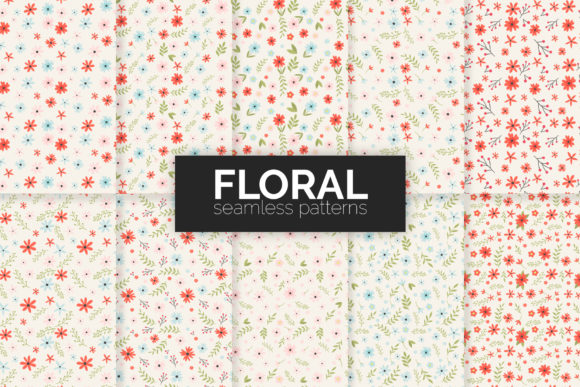
In the digital and creative landscapes, a floral seamless pattern is far more than a simple graphic. It is a versatile asset, a design element engineered to repeat infinitely without visible seams or breaks. This technical characteristic transforms it from a mere image into a functional tool for covering surfaces, filling backgrounds, and creating cohesive visual environments across everything from website headers to product packaging and fabric prints. Understanding this functionality is the first step to unlocking its practical value.
Identifying the Strategic Use Case
The decision to use a floral seamless pattern typically occurs in the planning phase of a project. Whether you are designing a brand identity, developing an e-commerce site, crafting a marketing campaign, or producing physical goods, you need to establish a visual tone. Florals often communicate specific attributes: organic growth, natural beauty, elegance, or a soft, welcoming aesthetic. The seamless aspect addresses a practical requirement—ensuring that this visual tone can be applied consistently across any area size without awkward, disjointed edges that break the user’s immersion or the product’s perceived quality.
This integration point is critical. The pattern becomes a foundational asset, similar to a color palette or a typeface. It interacts directly with other elements in your workflow. For instance, when building a website, the pattern must be tested against your navigation bars, text overlays, and button designs to ensure readability and harmony. In product design, the pattern file must be compatible with the specifications of your manufacturer or printing service, requiring correct resolution, color mode, and file format. Its adoption is rarely isolated; it is a decision that influences subsequent choices about layout, complementary graphics, and even photography style.
Preparation and Asset Management
Effective use begins with proper preparation. Before sourcing or creating a floral seamless pattern, define its required parameters. Consider the final output: is it for digital screen use (requiring perhaps a smaller file size and RGB color) or for high-resolution physical printing (necessitating large dimensions and possibly CMYK)? A pattern intended for a mobile app background needs to be lightweight, while one for a wall mural needs to be massive and detailed.
Organization is key. Treat these patterns as core library assets. Create a dedicated digital folder, tagging files by characteristics like color palette, floral density (bold vs. subtle), and intended use case (web, print, textile). This saves hours later when you need to quickly iterate or apply consistency across different projects. Many professionals maintain a "pattern library" alongside their font and logo libraries, ensuring brand materials can be deployed efficiently by different team members or for different client needs.
Integration into Active Workflows
Once selected and prepared, the floral seamless pattern enters the execution phase. Its application is a process that requires attention to both aesthetics and technical execution.
Digital Implementation Examples
For web and digital design, implementation is about layering and code. A floral seamless pattern might be applied as a CSS background-image with the ‘repeat’ property. The practical tip here is to always test the pattern on various screen sizes and devices. A dense, complex floral might look stunning on a desktop monitor but become a noisy, distracting mess on a small phone screen, harming usability. Consider using media queries to switch to a simpler pattern or a solid color on mobile breakpoints. This is a workflow integration point between your graphic asset and your development process.
In digital publishing or video content, the pattern can serve as a consistent frame for a series of YouTube videos or as the background for a slide deck template. Here, the workflow integration involves your template system. Save the pattern within the master slide or video project file so every new piece of content automatically inherits the branded look, ensuring consistency and saving repetitive manual application.
Physical Product and Print Workflows
For tangible outputs, the workflow integration is with manufacturing and prototyping. When designing a line of notebooks using a floral seamless pattern, you must provide the printer with a correctly tessellated file—the pattern must tile perfectly. A common practical step is to create and review a physical proof or sample. This quality control check ensures the colors print as expected and the repeat is truly seamless, with no glaring misalignments that would appear on the final product. This step sits between your design software and your supplier’s production process.
Similarly, in textile design for apparel or home decor, the pattern's scale is a crucial decision made during the design process. A large-scale, bold floral might be perfect for a statement curtain, while a smaller, delicate repeat is better for a dress fabric. This decision impacts the entire product development cycle, from the initial design sketch to the final cut of fabric.
Ensuring Long-Term Value and Consistency
A well-chosen floral seamless pattern is not a one-time asset. Its long-term value lies in its ability to provide visual consistency across a brand’s ecosystem. This requires a strategic view during its initial adoption.
Consider compatibility and evolution. Will this pattern still be effective if your brand colors shift slightly in a future refresh? Choosing patterns with adaptable color layers (often possible in vector formats) can make future updates more efficient. Also, think about usability across different departments. The marketing team might use it for social media graphics, the product team for packaging, and the web team for site design. Establishing clear guidelines—a simple style guide snippet on how and where to apply the pattern—ensures it is used appropriately, maintaining quality control without stifling creativity.
Efficiency gains are realized over time. Once the pattern is embedded in your template systems, brand resource folders, and team knowledge, applying it becomes a rapid, almost automatic step. It reduces the time spent searching for ad-hoc backgrounds or creating new decorative elements for every single project, allowing you to focus on the unique content and message instead of the repetitive framing.
Practical Tips for Smooth Integration
- Start with the Container: Define the space the pattern will fill first. Its scale and complexity should be relative to the container's size and purpose.
- Master the File Formats: Understand the strengths of vector (AI, SVG) for infinite scalability and raster (high-res PNG, TIFF) for textured detail. Keep both versions if possible.
- Build a Testing Protocol: Always apply the pattern to a mockup or prototype before final commitment. Check for visual clutter, readability of overlaid text, and cultural appropriateness for your target audience.
- Document Its Use: Note down successful applications and, importantly, any failed experiments. This becomes institutional knowledge, preventing future missteps.
- Consider Accessibility: In digital uses, ensure pattern backgrounds do not violate contrast guidelines for text, making content accessible to all users.
The Outcome: Enhanced Cohesion and Efficiency
The ultimate outcome of thoughtfully integrating floral seamless patterns into your workflow is a dual benefit: enhanced visual cohesion and improved operational efficiency. Your projects, whether a website, a product line, or a content series, carry a consistent, professional aesthetic that reinforces identity. Simultaneously, the repeatable nature of the asset streamlines your production process. You are not constantly reinventing the decorative wheel.
For the entrepreneur, this means a more polished brand presence without constant designer fees. For the marketer, it means faster campaign asset creation. For the content creator, it means a recognizable visual frame that audiences associate with quality. The floral seamless pattern, therefore, transitions from a passive decorative piece to an active workflow component—a prepared, managed, and strategically applied tool that supports both your creative vision and your practical execution.