The Practical Application of Modern Bohemian Patterns
Patterns are a fundamental tool in design, and the resurgence of the Bohemian aesthetic has led to a distinct evolution in its visual language. Modern Bohemian patterns represent a fusion of traditional, free-spirited motifs with contemporary design principles, resulting in a style that is both eclectic and refined. This boho pattern style is not merely a decorative trend; it is a versatile creative asset with significant practical application across various media and industries.
At its core, a Modern Bohemian pattern balances organic, often irregular forms with a structured, repeatable layout. Unlike the purely chaotic or maximalist traditional Bohemian look, these modern interpretations emphasize usability. They are designed to integrate seamlessly into digital and physical products, from website backgrounds and app interfaces to textile prints and packaging design. This balance makes the boho pattern a compelling choice for professionals seeking to inject warmth and personality into projects without sacrificing clarity or functionality.
Key Characteristics Defining the Modern Boho Pattern
Several defining features separate a contemporary boho pattern from its historical counterparts. Understanding these characteristics is crucial for effective implementation.
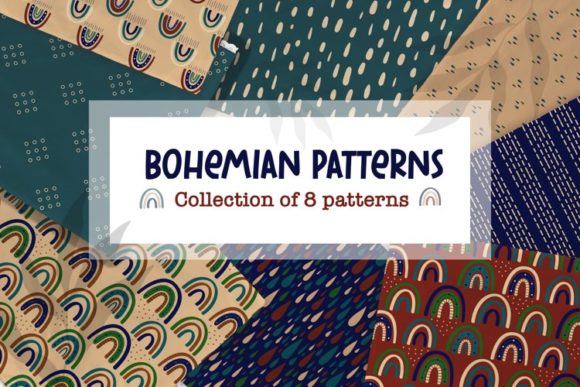
- Refined Color Palettes: While traditional Bohemian patterns might use a riot of contrasting colors, modern versions often employ muted, earthy tones or sophisticated monochromatic schemes. Think terracotta, sage green, ochre, and charcoal instead of primary brights. This subdued approach increases the pattern's versatility and broadens its audience appeal.
- Geometric Underpinnings: Many modern boho patterns incorporate underlying geometric structures—clean grids, precise stripes, or hexagonal frameworks—upon which organic elements are arranged. This provides visual stability and makes the pattern easier to tile or repeat across large surfaces without creating visual overwhelm.
- Simplified Motifs: Classic Bohemian icons like paisleys, florals, and mandalas are often rendered with cleaner lines and reduced detail. The simplification enhances scalability, allowing the pattern to work equally well on a small mobile screen and a large wall mural.
- Intentional Negative Space: Modern designers of boho patterns frequently use space as a design element. This breather area prevents the pattern from feeling dense and cluttered, improving legibility when used in conjunction with text or other UI elements.
The Practical Value in Professional and Creative Work
The strengths of the Modern Bohemian pattern lie in its dual nature: it is evocative yet orderly. For professionals, marketers, and creators, this translates into several tangible benefits.
Firstly, it offers a distinctive brand aesthetic. In a marketplace saturated with minimalist or ultra-modern visuals, a well-executed boho pattern can immediately signal creativity, warmth, and a human-centric approach. A small business owner in the lifestyle, wellness, or artisan crafts sector could use such patterns in their branding to communicate these values authentically.
Secondly, its flexibility is a major asset. A single high-quality Modern Bohemian pattern asset pack can be adapted for numerous applications: social media graphics, product labels, website accent elements, and even physical product finishes like fabric or ceramic. This consistency across touchpoints strengthens brand identity while saving design time. Educators and publishers might find these patterns useful for creating engaging, non-clichéd materials for certain subjects, adding visual interest without distracting from the core content.
Evaluating Quality and Usability in Real-World Projects
When evaluating a specific Modern Bohemian pattern for a project, several performance criteria come to mind. The pattern's file quality is paramount—it should be provided in vector formats (like SVG or AI) for infinite scalability, and high-resolution raster formats for digital use. The repeat should be seamless and flawless; a visible seam or awkward overlap in a tiled pattern renders it unusable for most professional applications.
Usability also relates to context. How does the pattern perform when text is overlaid? Does it maintain its character when used in a small footer versus a full-page background? A robust modern boho pattern will have been tested for these scenarios. Furthermore, its color palette should be considered for accessibility; contrast ratios need to be sufficient if the pattern area also contains readable information.
Audience Fit and Situational Recommendations
Not every project calls for a Bohemian aesthetic. The modern boho pattern is particularly well-suited for audiences and situations that value a blend of creativity, comfort, and a slightly artisanal feel.
- Creative Entrepreneurs & Small Businesses: Brands in eco-friendly products, handmade goods, boutique hospitality, or holistic services can leverage these patterns to visually differentiate themselves and connect with a community-oriented clientele.
- Digital Content Creators & Bloggers: Those focusing on travel, interior design, personal style, or cultural topics can use boho patterns as thematic visual anchors in their blog layouts, video backgrounds, or newsletter designs, enhancing thematic coherence.
- Freelancers in Design: Graphic and web designers can add these patterns to their asset libraries to offer clients a distinct style option beyond the standard corporate templates, thereby expanding their service range.
- Serious Hobbyists: Individuals engaged in crafts, journaling, or personal digital projects can find in these patterns a source of inspiration and a ready-made tool for elevating their personal work.
Conversely, the style would likely be a mismatch for projects requiring a highly formal, technical, or austere presentation, such as financial reporting tools, legal firm branding, or industrial hardware interfaces.
Potential Limitations and Balanced Considerations
A pragmatic view of Modern Bohemian patterns also requires acknowledging possible limitations. The aesthetic is inherently specific. If overused or applied without strategic restraint, it can make a design feel thematic or niche, potentially alienating segments of a broader audience. It requires thoughtful pairing with complementary fonts and layout elements; pairing a complex boho pattern with an overly decorative font, for example, could result in a visually chaotic outcome.
Another consideration is longevity. While the modern interpretation is more timeless than a fleeting trend, design tastes evolve. Investing in a pattern that is too stylized might have a shorter effective lifespan in a brand identity than a more neutral asset. Therefore, selecting patterns with a balanced design—where the Bohemian elements are subtle rather than dominant—often provides better long-term value.
Integrating Boho Patterns into Your Workflow
For those considering adopting Modern Bohemian patterns, a methodical approach is recommended. Start by sourcing patterns from reputable designers or asset libraries that emphasize the modern characteristics discussed: refined color, geometric stability, and high technical quality. Introduce the pattern initially as an accent rather than a dominant foundation—perhaps as a border, a button fill, or a header background. Test its effectiveness by gauging audience response or measuring engagement metrics if used in digital marketing materials.
Ultimately, the decision hinges on alignment with your project's goals and audience expectations. A Modern Bohemian pattern is a powerful tool when its eclectic yet orderly nature serves a clear communicative purpose. It is not merely decoration; it is visual language. By evaluating its characteristics, quality, and fit with the same rigor applied to any other professional resource, you can determine whether this particular creative asset will enhance your work and resonate with those you aim to reach.