The Creative Potential of Leaves Seamless Repeat Patterns
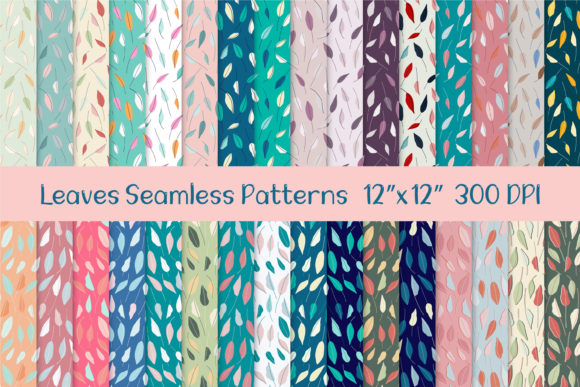
In the worlds of design, marketing, and content creation, finding a versatile and evocative visual foundation is a constant pursuit. Leaves Seamless Repeat Patterns offer exactly that: a timeless, infinitely scalable graphic motif that speaks to growth, nature, organic beauty, and quiet vitality. Unlike a standalone illustration, a seamless repeat pattern is engineered so that its edges perfectly match, allowing it to tile across any digital or physical space without interruption. This creates a continuous, immersive background or texture that feels both structured and naturally flowing.
What makes this particular theme so interesting is its inherent duality. Leaves symbolize both meticulous detail—the veins, the serrated edges, the unique shapes—and broad, comforting concepts like renewal and sustainability. This duality means the pattern can adapt to vastly different contexts. It can provide a sophisticated, earthy backdrop for a wellness brand's website or become a playful, vibrant print on a child’s textile. The seamless nature ensures professionalism; the subject matter ensures connection.
Unlocking Creative Applications Across Fields
The utility of a leaves pattern extends far beyond mere decoration. Its application is a matter of interpretation and scale. For a digital creator, it might become the perfect background for a YouTube channel discussing gardening or mindfulness, reinforcing the channel's core themes subtly. A graphic designer could isolate individual leaf elements from the pattern to use as icons or logos, deriving a whole brand identity from a single repeatable asset.
Transformations Through Style and Color
The foundational pattern is just the starting point. Consider these stylistic variations:
- Monochromatic Minimalism: Using shades of a single color, like sage green or charcoal, creates a modern, calm texture ideal for editorial design or high-end product packaging.
- Bold and Graphic: Outlining leaves in a solid, contrasting color against a bright background shifts the mood to energetic and contemporary, fitting for tech startups or educational apps with an eco-focus.
- Watercolor Wash: Soft, blended, translucent leaf impressions evoke artistry and craftsmanship, perfect for stationery, book covers, or a boutique’s branding.
- Geometric Integration: Combining the organic leaf shapes with clean lines, dots, or grids can bridge natural and human-made, appealing to architecture or urban planning audiences.
Each style recontextualizes the pattern for a different audience, proving its adaptability.
Practical Project Ideas for Immediate Inspiration
For the hobbyist, entrepreneur, or educator looking for a concrete starting point, here are realistic ways to deploy Leaves Seamless Repeat Patterns.
For Small Business Owners: Use a subdued leaf pattern as the border or background on your product’s care instructions, thank-you notes, or packaging tape. This subtly communicates an eco-conscious ethos without overhauling your primary logo. On your website, use it as a very low-opacity background for your “Our Story” or “Sustainability” page to visually underscore your narrative.
For Content Publishers & Bloggers: Create custom social media banner images featuring a section of the pattern. For a blog post about autumn recipes, you might use a pattern with golden-toned leaves; for a post on indoor plants, opt for a pattern with lush, green varieties. This creates consistent, theme-based visual branding across your content.
For Freelancers & Educators: Design your own presentation templates. A gentle leaf pattern along the bottom margin of your slides can make a workshop on environmental science or creative writing feel more cohesive and thoughtfully designed than a generic template. Similarly, it can form the basis of a worksheet or printable calendar, making functional materials aesthetically pleasing.
Maintaining Clarity and Originality
When working with any repeat pattern, balance is key. To keep results effective and audience-friendly:
- Prioritize Readability: Never place busy text directly over a high-contrast, detailed pattern. If using it as a background, dramatically lower the opacity or confine it to non-text areas. The pattern should support the message, not compete with it.
- Establish Hierarchy: Let the pattern be a supporting layer. Your primary content—images, headlines, calls to action—should remain the dominant visual elements. The pattern provides atmosphere, not focus.
- Customize for Originality: Even with a given pattern, you can make it unique. Consider overlaying a subtle texture (like paper grain), adding a very light gradient, or blending two complementary patterns (e.g., leaves with tiny, subtle dots) to create a signature look that feels distinct.
Adapting to Formats and Contexts
The seamless nature of Leaves Seamless Repeat Patterns makes it format-agnostic. In digital contexts, it can scale to become a full website wallpaper, a mobile app UI texture, or a small avatar border. In physical print contexts, it’s equally powerful. Consider it for:
- Textile and product design: Repeating on fabric for apparel, curtains, or tote bags.
- Wallpaper and large-scale prints: Creating a feature wall in a café, office, or retail space.
- Merchandise and accessories: As subtle detailing on notebook covers, mug wraps, or gift cards.
The key is to match the pattern’s density to the format. A large-format print might use a bigger, more spaced-out iteration of the pattern, while a small sticker might use a dense, intricate version.
Ultimately, Leaves Seamless Repeat Patterns are less about the specific leaves and more about the concepts of continuity, organic growth, and adaptable beauty they represent. They provide a creative scaffold that is both disciplined (through its technical repeatability) and expressive (through its natural subject). For the marketer, it’s a tool for building brand atmosphere. For the designer, it’s a versatile asset. For the creator or entrepreneur, it’s a source of immediate, applicable aesthetic value that can elevate projects without requiring custom illustration from scratch. By interpreting it through color, scale, and application, you can make it serve a clear, effective purpose for your specific audience and goals, grounding inspiration in a truly practical, repeatable asset.