Evaluating Valentine Heart Patterns Digital Paper for Creative Projects
Professionals and serious hobbyists who regularly source design assets know that the right digital paper can save hours of work and elevate a final product. Valentine Heart Patterns Digital Paper is one such resource that surfaces each year around the romantic holiday, but its practical utility extends well beyond February’s greeting cards. What makes this type of asset worth your attention isn’t sentiment—it’s the combination of visual consistency, technical reliability, and adaptable repetition that a well-crafted pattern set provides. This article takes an objective look at what you actually get, how it performs under real project conditions, and where it fits into a professional or semi-professional creative workflow.
What Valentine Heart Patterns Digital Paper Actually Includes
At its simplest, Valentine Heart Patterns Digital Paper is a collection of high-resolution graphic files—usually JPG, PNG, or occasionally layered PSD or vector formats—featuring repeating heart motifs, romantic color palettes, and coordinated background textures. The term “digital paper” in this context refers to seamless patterns that mimic the look of printed scrapbook sheets but are delivered electronically. A typical pack may contain between 10 and 30 individual designs, each offering a distinct arrangement of hearts, often mixed with subtle geometric elements, watercolor washes, foil effects, or distressed textures.
What separates a usable pack from a forgettable one boils down to several specifics: the resolution (300 DPI as a credible baseline), the seamlessness of the repeat, and the file organization. The patterns should tile perfectly when applied to a canvas of any size, from a business card to a large-format banner. The inclusion of both light and dark backgrounds, as well as varied scales—tiny all-over hearts versus larger statement motifs—expands versatility. In evaluating such a set, you’re checking for these details before anything else.
Technical Quality and File Integrity
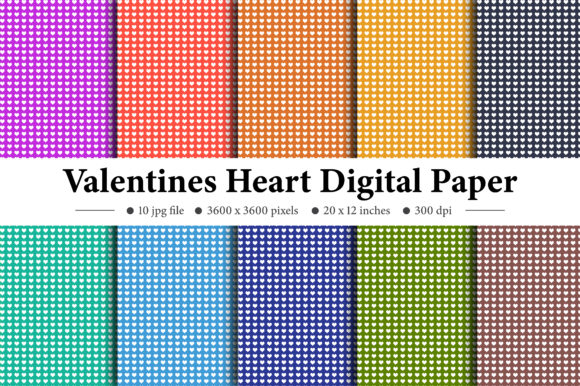
When you open a digital paper pack, the first practical test is whether the files are print-ready. For Valentine Heart Patterns Digital Paper, that means checking that each JPG delivers true 300 DPI at a usable dimension—typically 12x12 inches (3600x3600 pixels) is standard for scrapbooking and stationery, but any side above 2500 pixels works well for most digital applications. PNG files with transparent backgrounds add an extra layer of flexibility for layering in programs like Procreate or Adobe Photoshop, though they are less common in pattern packs than solid-background JPGs.
Consistency across the set matters more than many users realize. Sudden shifts in resolution or color space from one sheet to the next can break a cohesive project. You want files that open with the same embedded profile, ideally sRGB for digital work or CMYK for press. A quality Valentine Heart Patterns Digital Paper set maintains uniformity; if the pack is well-produced, you won’t find one pattern in pastel pink and the next in oversaturated fuchsia that looks neon against a print layout. Good assets behave predictably, and that predictability is what makes them safe to integrate into client projects without painful adjustments later.
Seamless Repeat and Tiling Performance
For pattern work, seamlessness isn’t a bonus—it’s the core requirement. A heart pattern that reveals an obvious line every 3600 pixels wrecks any chance of professional use. You can test this quickly by placing a sheet in your design software, duplicating it, and aligning the edges. Quality Valentine Heart Patterns Digital Paper handles this with precision; the repeat should be invisible even under magnification. The best packs avoid heavy directional elements that create awkward joins, using symmetrical or semi-randomized heart placements to keep the eye moving fluidly across the surface.
Color Palette and Aesthetic Range
Typical Valentine-themed resources lean heavily on red, pink, and white, but a thoughtfully composed pack goes deeper. You might find muted burgundy, blush, champagne, slate, gold foil, and even unexpected neutral bases like cream or light gray that temper the sweetness and broaden the design’s appeal. This matters because an overly saccharine palette limits use cases. A digital paper set that includes sophisticated, low-saturation options can shift from children’s classroom decor to elegant wedding stationery or boutique product packaging without feeling forced.
The aesthetic itself varies—some packs focus on vintage Victorian illustrations, others on modern flat vectors, hand-drawn marker sketches, or seamless watercolor puddles. From a professional standpoint, a cleaner vector-based style often scales better and reprograms more easily in Adobe Illustrator, while raster-based watercolor or foil textures look richer on physical materials like fabric or cardstock printed through a quality inkjet. The choice depends entirely on your output medium.
Usability Across Software and Devices
An often overlooked metric when evaluating Valentine Heart Patterns Digital Paper is how well it integrates into different creative environments. Most designers will bring these files into Adobe Photoshop or Illustrator to create clipping masks, pattern swatches, or background layers. In Photoshop, defining a pattern preset from a digital paper is straightforward, but only if the tile is genuinely seamless. In Illustrator, unless the original file is vector, you’re limited to placing the raster pattern and masking it—acceptable but less flexible. However, for Canva, Microsoft Publisher, or even PowerPoint, the JPG digital paper shines because it works as a simple image fill. Many non-designer small business owners rely on these platforms, and a pack that performs cleanly in Canva’s drag-and-drop interface adds immediate value for that audience.
For digital planners, tablet-based journaling apps, and Procreate artists, file size and format matter. Overly heavy PNGs can slow down an iPad workflow, so a balanced mix of high-quality JPGs with optional transparent PNG overlays strikes the right compromise. A pack that loads quickly and still holds crisp resolution on a Retina display will see more repeated use than one that chokes device memory.
Real-World Applications Beyond Valentine’s Day
The most practical way to judge Valentine Heart Patterns Digital Paper is to catalog where it directly solves a design problem. The obvious candidates are Valentine’s Day cards, social media posts, and classroom party decor. But small business owners who run online shops often repurpose these patterns year-round. A muted heart pattern on a kraft background can become a jewelry brand’s packaging liner. A tiny repeat heart design in metallic gold can line the inside of a business envelope for a wedding planner. Educators can use the sheets to create themed math centers or bulletin board borders without hunting for cohesive clip art. The heart symbol, while romantic, is also universally recognized and easily accepted in feminine branding, self-care product labels, and scrapbooking kits.
Consider a scenario: a freelance graphic designer building a product catalog for a boutique soap company. The soaps are rose-scented, wrapped in simple labels. Instead of photography, the designer uses a subtle watercolor heart pattern as a background texture for the catalog’s introductory spread, pulling a pale blush tone from the soap’s packaging. The pattern repeats seamlessly across a 12-page layout in InDesign, never calling excessive attention to itself. That’s a low-effort, high-impact application. The digital paper does the heavy lifting on texture and mood, leaving the designer free to focus on typography and product information.
Strengths and Practical Limitations
An honest evaluation requires noting where Valentine Heart Patterns Digital Paper excels and where it might fall short for a professional audience. Among its strengths: immediate seasonal relevance, broad emotional appeal, and the fact that hearts are one of the most licensed, endlessly reused motifs in commercial design. A well-made pack can be used hundreds of times without redundancy when recolored or scaled. It also stacks well with other patterns—imagine combining a subtle heart overlay with a stripe or polka dot paper for a layered textile look.
Limitations come into play when the pattern is overly specific. A sheet that says “Be Mine” in loopy script, while charming, anchors the design to English-language Valentine’s messaging, reducing cross-cultural or year-round usability. Similarly, patterns that are too dense or brightly colored can compete with text, limiting their use as background layers in reading-heavy documents. If the pack lacks commercial licensing or has restrictions on print-on-demand use, that can be a non-starter for sellers on platforms like Etsy or Redbubble. It’s essential to review license terms before buying; not all digital paper is created for commercial reproduction, and ambiguous terms can lead to unnecessary risk.
Commercial License Considerations
Many creative entrepreneurs have learned the hard way that “personal use only” means exactly that. When evaluating Valentine Heart Patterns Digital Paper, check whether the license permits physical product creation, digital product resale, or use in client work. A common model is an extended license that allows up to a certain number of printed copies. Serious hobbyists who craft for occasional sale and design professionals who bill hours should both treat licensing clarity as a filter. A pack that’s highly affordable but has vague terms might cost more in legal unease than it saves in dollars.
Who Gains the Most from This Resource
Different user groups extract different value. Stationery designers and invitation creators gain an instantly cohesive look without illustrating hearts by hand. Bloggers and social media managers get a fast way to template seasonal content that still looks curated. Crafters making physical products—mugs, T-shirts, pillow covers—appreciate high-resolution files that hold up under sublimation or screen printing. Educators running a classroom TPT store can use the patterns to create printable worksheets that feel festive without overwhelming the content. Publishers and ebook authors occasionally incorporate such patterns into chapter dividers or promotional graphics, provided the rights allow.
If you are a professional who rarely touches seasonal themes, this might not become your most-used folder. But if your work calendar includes even a handful of February projects or romance-themed branding, a single versatile pack can justify its cost quickly. The time saved by not sketching heart icons and arranging them into a seamless repeat from scratch is substantial. At typical marketplace prices, the resource costs less than 30 minutes of a designer’s billable time, making it an easy efficiency gain.
Long-Term Value and Creative Repurposing
The best digital assets age well because you can reinvent them. Valentine Heart Patterns Digital Paper, when chosen for clean design and neutral-adjacent tones, can be pulled into spring designs (pastels with floral overlays), wedding suites, or even Mother’s Day promotions. By adjusting hue and saturation in Photoshop, you can shift an entire pack from candy pink to soft lavender, effectively creating a new look without purchasing additional files. Layering the heart pattern with a gradient map or a monochrome filter can transform it into a subtle background that evokes love without screaming Valentine’s. This adaptability extends the practical lifespan of the digital paper far beyond a single holiday.
Another overlooked long-term benefit is brand continuity. A small business that uses the same heart motif across packaging, website banners, and thank-you notes builds a subtle visual signature. Using the same digital paper pack for all these pieces ensures exact color matching—when you print a hang tag and view it alongside your Instagram post, the reds align. That consistency, grounded in a single source file set, can be surprisingly difficult to achieve when pulling graphics from multiple places.
Making a Confident Selection
If you’re considering adding Valentine Heart Patterns Digital Paper to your asset library, let your project type and output medium guide you. For print projects, prioritize 300 DPI and rich, deep tones that won’t wash out on uncoated paper. For digital scrapbooking or screen-only use, vibrant RGB colors and smaller file sizes may matter more. Always download a preview or examine sample images carefully—look for uneven edges around heart shapes, visible pixelation, or awkward tiling seams. A pack that holds up under a quick zoom test is likely to behave well in practice.
Extend this scrutiny to the style: if you need something modern and clean, choose vector-like patterns; if you want tactile warmth, go for watercolor or chalkboard textures. And don’t ignore the backgrounds. A pattern set that includes both white-background and transparent PNG overlays multiplies what you can do, allowing you to place hearts over photos, colored paper, or other patterns without cutting out shapes manually.
Valentine Heart Patterns Digital Paper is ultimately a focused, seasonal resource that works best when its limitations are understood and its strengths are fully exploited. For the right user—someone with recurring design needs tied to romance, affection, or soft branding—it’s a compact, efficient tool that pays for itself in creative time recovered.